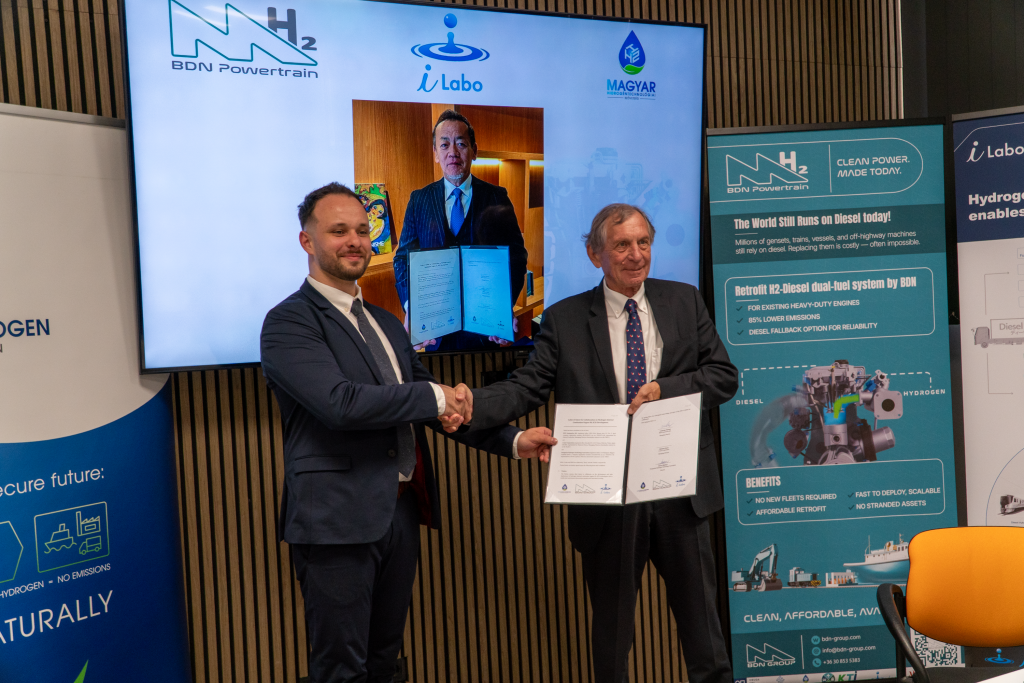
Japan-Hungary technological cooperation in the development of hydrogen propulsion: BDN Automotive, iLabo Corporation and the Hungarian Hydrogen Technology Association have signed a partnership agreement. The agreement signed today is not only the beginning of a technological partnership, but also the first step in realizing a common vision, in which Japanese precision, Hungarian engineering knowledge and commitment to sustainable mobility come together, the signatories emphasized.
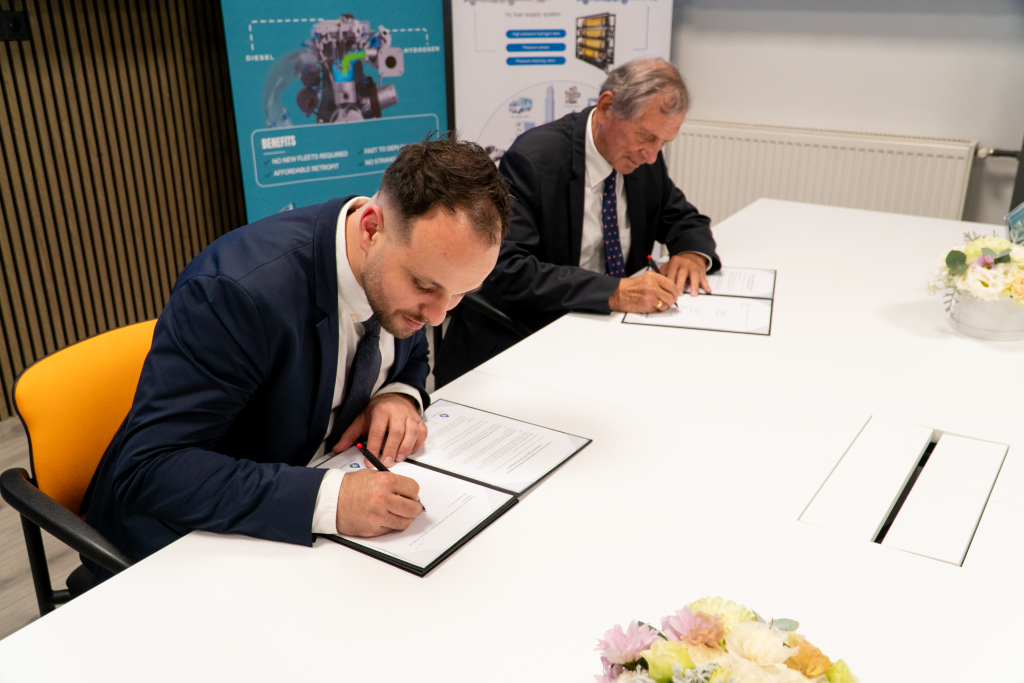
In a ceremonial setting, the Japanese iLabo Corporation, BDN Automotive Kft. (BDN) and the Hungarian Hydrogen Technology Association (MHTSZ) signed a cooperation agreement aimed at the development and experimental application of hydrogen internal combustion engines (H₂ ICE).
The signing was also the official opening event of BDN’s latest hydrogen-diesel dual-fuel development, which enables up to 85% CO₂ emission reduction by retrofitting diesel engines without replacing the existing vehicle fleet.
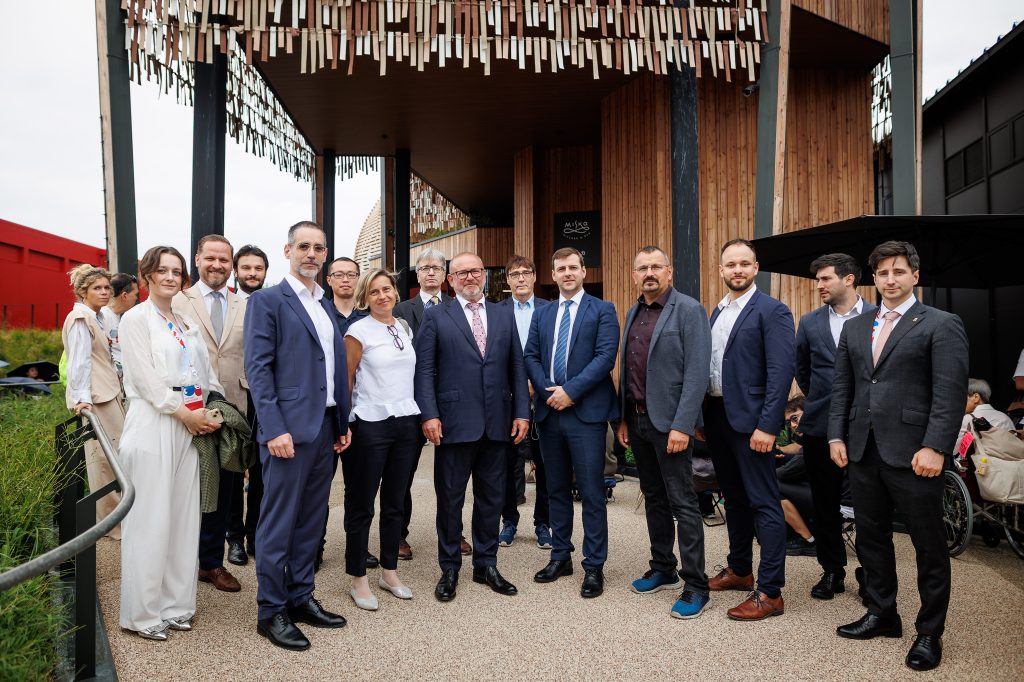
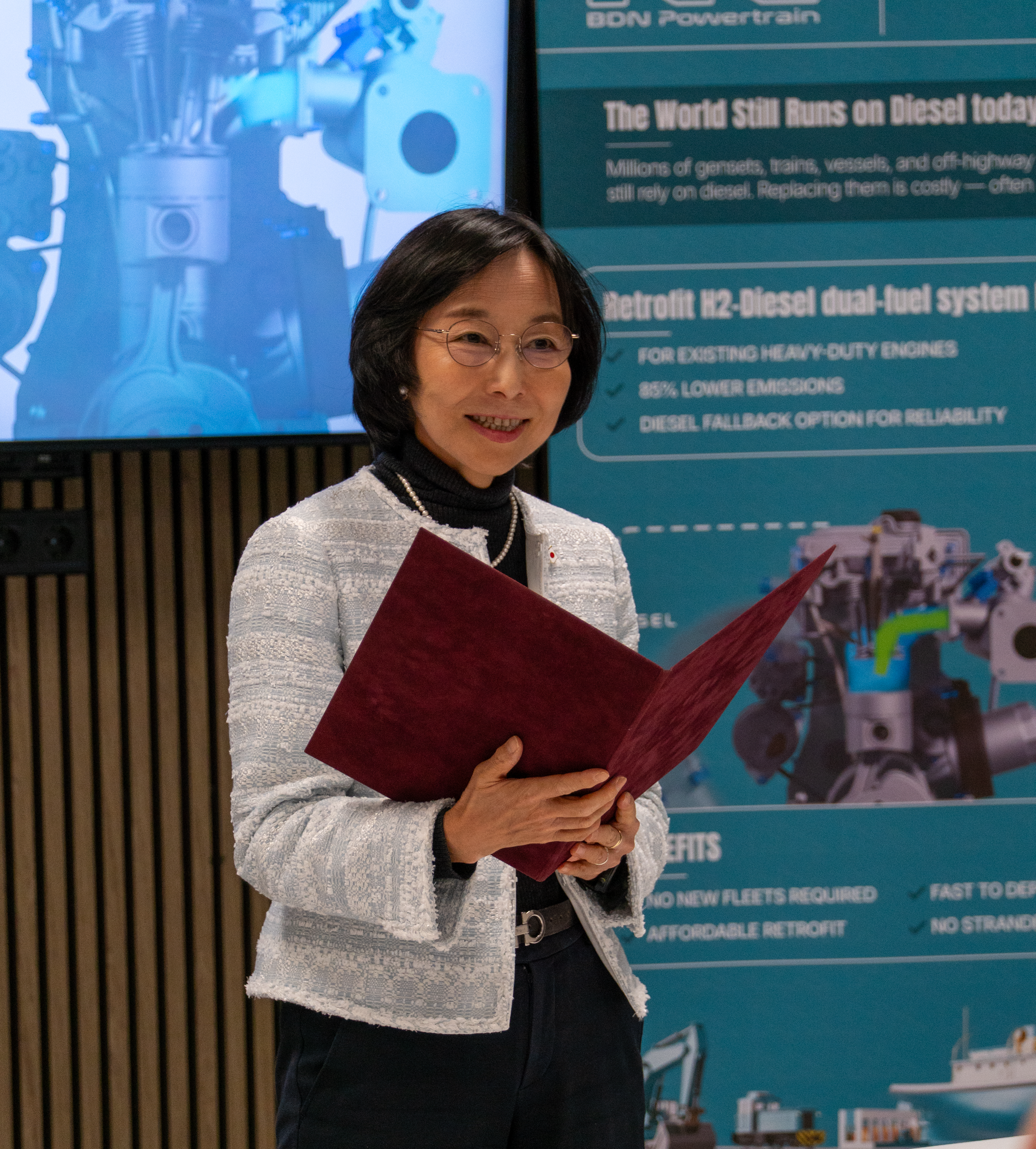
The event was opened by Hikariko Ono, Ambassador of Japan to Hungary, and István Lepsényi, President of MHTSZ, who emphasized that the initiative is not only an important milestone in the domestic and international spread of hydrogen-based transport, but also a good example of how hydrogen is also a new engine for international innovation and economic cooperation.
The MHTSZ takes on a coordinating role in communication, regulatory dialogue and ecosystem building, thereby facilitating the social acceptance of the technology and the integration of hydrogen as an energy carrier into the economy.
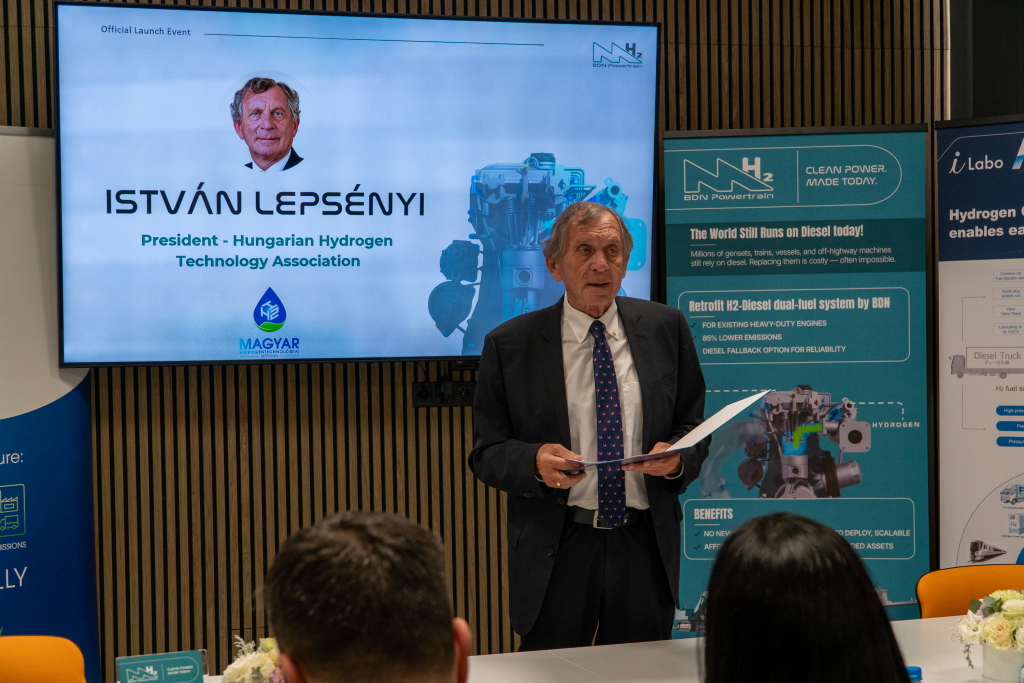
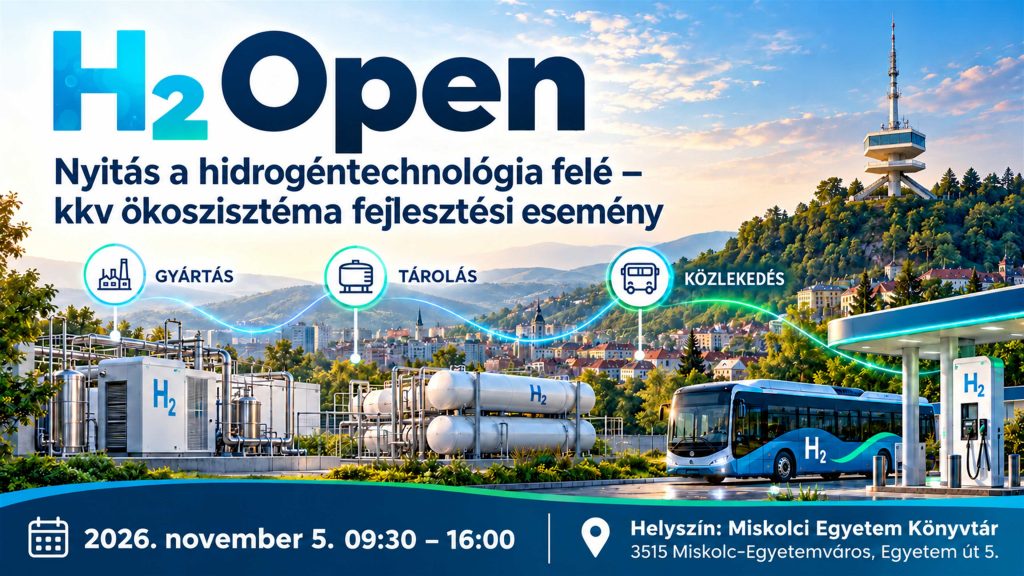
In his speech, István Lepsényi highlighted that these collaborations and successes prove how important the programs and events that support the development of domestic companies are, which the Association organizes every year. He added that the Hydrogen Open Budapest event in January could open the way for more domestic companies, to which hundreds of international experts and company leaders from 14 countries will arrive to discuss the possibilities of hydrogen technology, the regulatory tasks ahead, development directions and support opportunities at an international level.
Imre Hild, CEO of OUVC, a venture capital investment company affiliated with Óbuda University, also spoke at the event, highlighting that the university is not only a supporter of such technological developments, but also promotes the recruitment of the industry and research and development collaborations by launching an independent hydrogen department. BDN is currently looking for industry partners and additional investors for the international introduction of the technology.
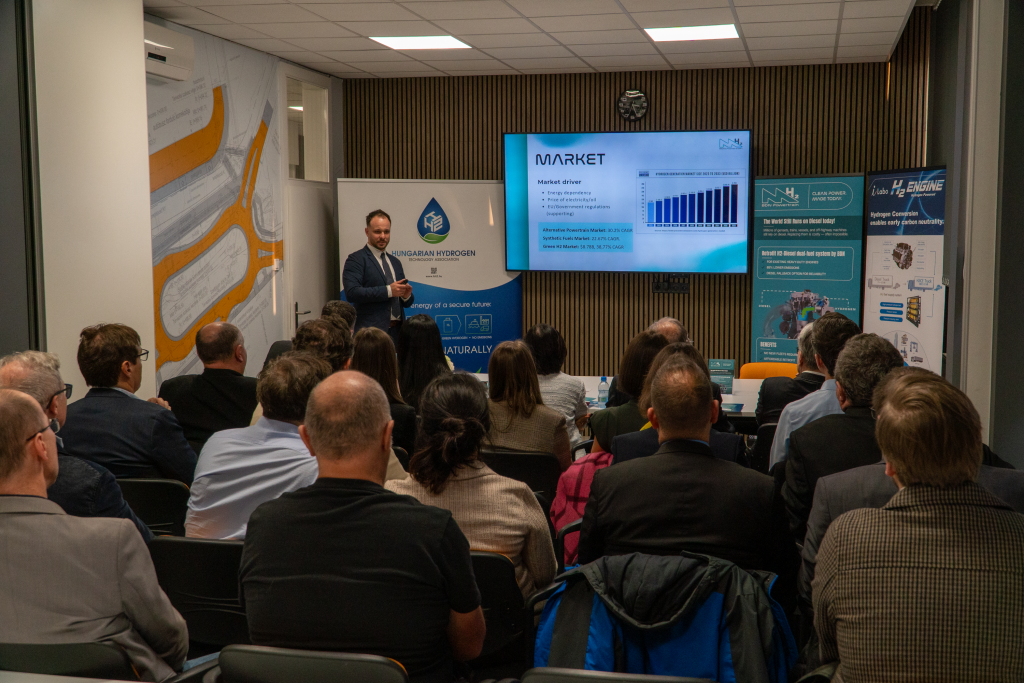
“Hydrogen is one of the most promising directions for decarbonizing transport and industry. Our goal is to offer a fast, cost-effective and scalable solution to reduce emissions by converting existing engines — not in 10 years, but now,” said Nimród Ludescher, founder and CEO of BDN Automotive, who previously won the Hungarian Hydrogen Technology Innovation Award, organized by the Hungarian Hydrogen Technology Association and the Hungarian Research Network HUN-REN.
The collaboration, based on iLabo’s laboratory and measurement infrastructure and BDN’s European development and calibration experience, also opens up new opportunities in the field of innovation and sustainability in the technological partnership between Japan and Hungary.