News

Enough rare earth minerals to fuel green energy shift

“Decarbonization is going to be big and messy, but at the same time we can do it,” The world has enough rare earth minerals and other critical raw materials to switch from fossil fuels to renewable energy to produce electricity and limit global warming, according to a new study that counters concerns about the supply of such minerals. With a push to get more electricity from solar panels, wind turbines, hydroelectric and nuclear power plants, some people have worried that there won’t be enough key minerals to make the decarbonization switch Rare earth minerals, also called rare earth elements, actually aren’t that rare. The U.S. Geological Survey describes them as a “relatively abundant.” They’re essential for the strong magnets necessary for wind turbines; they also show up in smartphones, computer displays and LED light bulbs. This new study looks at not only those elements but 17 different raw materials required to make electricity that include some downright common resources such as steel, cement and glass. A team of scientists looked at the materials — many not often mined heavily in the past — and 20 different power sources. They calculated supplies and pollution from mining if green power surged to meet global goals to cut heat-trapping carbon emissions from fossil fuel. Much more mining is needed, but there are enough minerals to go around and drilling for them will not significantly worsen warming, the study in Friday’s scientific journal Joule concluded. “Decarbonization is going to be big and messy, but at the same time we can do it,” said study co-author Zeke Hausfather, a climate scientist at the tech company Stripe and Berkeley Earth. “I’m not worried we’re going to run out of these materials.” Much of the global concern about raw materials for decarbonization has to do with batteries and transportation, especially electric cars that rely on lithium for batteries. This study doesn’t look at that.   Looking at mineral demands for batteries is much more complicated than for electric power and that’s what the team will do next, Hausfather said. The power sector is still about one-third to half of the resource issue, he said. A lot depends on how fast the world switches to green energy. There will be short supplies. For example, dysprosium is a mineral used for magnets in wind turbines and a big push for cleaner electricity would require three times as much dysprosium as currently produced, the paper said. But there’s more than 12 times as much dysprosium in reserves than would be needed in that clean energy push.

Enough rare earth minerals to fuel green energy shift Read More »
Researchers use sea water to produce green hydrogen at almost 100% efficiency.

Sea water hasn’t been a viable option because the salt in the water is highly corrosive.
The corrosion causes expensive materials such as catalysts made from precious metals to degrade. This not only drives up the expense but also the environmental impact of the process. That said, the researchers claim that they have been able to produce green hydrogen using sea water and have achieved an efficiency rate of almost 100 percent.

Researchers use sea water to produce green hydrogen at almost 100% efficiency. Read More »

US regulator completes first SMR design certification rulemaking

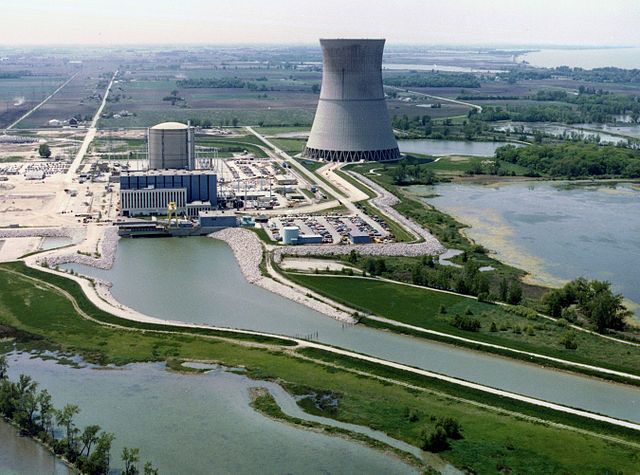
The US Nuclear Regulatory Commission (NRC) has issued the final rule certifying NuScale Power’s small modular reactor (SMR), making it the seventh reactor design – and the first SMR – to be cleared by the regulator for use in the USA. The final rulemaking is the last stage in the design certification process, which allows a utility to reference the design when applying for a combined licence to build and operate a nuclear power plant anywhere in the USA. Site-specific licensing procedures must still be completed and a combined construction and operating licence obtained before construction can begin. The NRC accepted NuScale’s design certification application for a plant comprising up to twelve 50 MWe power modules in March 2018. The regulator issued its final technical review in August 2020, and the NRC Commission voted to certify the design in July 2022. The company has subsequently uprated the capacity of the power unit to 77MWe and earlier this month submitted an application for NRC approval of a 6-unit configuration based on the uprated design. NuScale’s SMR plant has been known as VOYGR since December 2021. NuScale Power President and CEO John Hopkins described the rulemaking as „historic” and acknowledged the role of the US Department Energy (DOE), which has provided more than USD600 million since 2014 to support the design, licensing, and siting of VOYGR and other domestic SMR concepts. Az amerikai szabályozó hatóság befejezi az első SMR tervezési tanúsítási szabályalkotást: Szabályozás és biztonság – World Nuclear News (world-nuclear-news.org)

US regulator completes first SMR design certification rulemaking Read More »

The New Hydrogen Car that Travels 2,000 Kilometers with a Single Tank

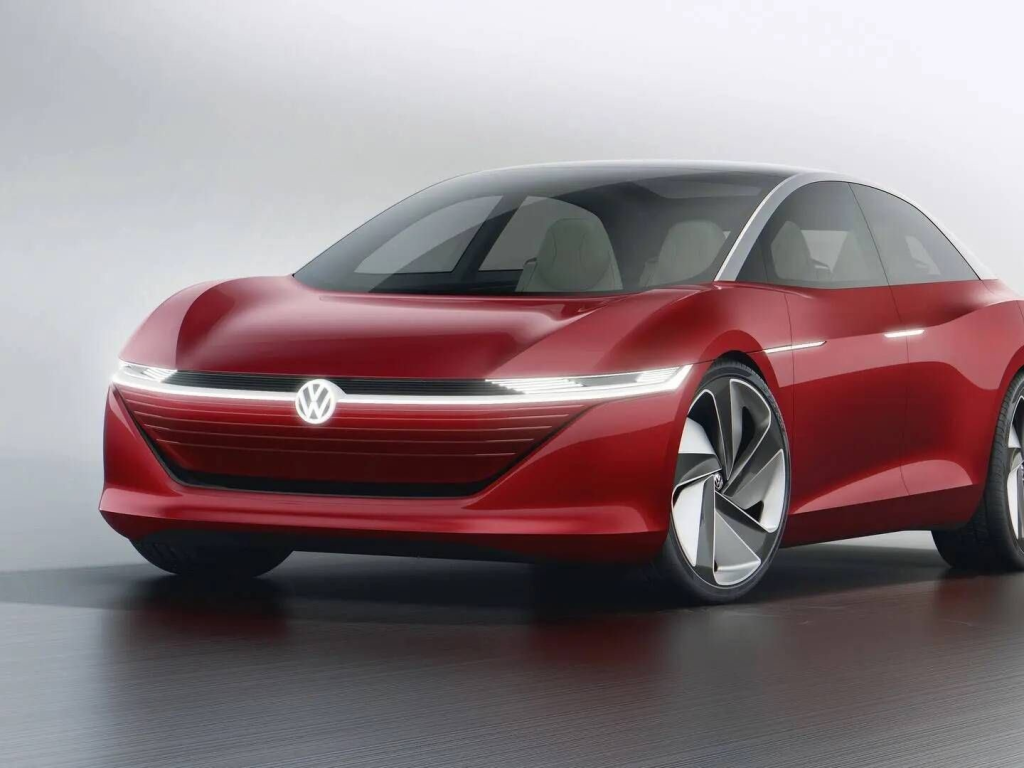
Volkswagen is working on a new fuel cell that is much cheaper than the current ones and promises hydrogen cars that can travel 2,000 kilometers on a single tank. Volkswagen has just applied for the registration of a patent for a new hydrogen fuel cell that, in addition to being cheaper than the current ones , will be able, according to its creators, to give cars a range of up to 2,000 kilometers without refueling This news represents a turn in the position that Volkswagen usually shows regarding hydrogen. Like Elon Musk does every time he has the opportunity, the German manufacturer’s CEO, Herbert Diess, denied the potential of hydrogen as a power source for electric cars in a tweet published in May 2022. Herbert Diess, CEO, said: It has been shown that the Hydrogen car is not the solution to climate problem. “In transport, electrification has taken over. Fake debates are a waste of time. Please listen to the science.” The patent application for this new fuel cell, carried out together with the German company Kraftwerk Tubes, shows that Volkswagen does not want to lose the hydrogen train and works outside the public eye in the development of this technology. Sascha Kühn, Kraftwerk CEO explains in an interview with Business Insider Germany: The main difference with Hyundai and Toyota hydrogen cells is that we use a ceramic membrane instead of the usual plastic one. That’s a big difference. “The big advantage of our solution is that it can be produced much cheaper than polymer fuel cells and it does not require any type of platinum”, a precious metal that makes the final cost of the product more expensive. This technology, Kühn says, resembles solid-state batteries. According to the executive, both have almost the same electrolytes and a similar material structure. The difference is that, while solid-state batteries use a compact material to store energy, in fuel cells that role is assumed by hydrogen in gas form. Lower energy cost, more autonomy; In addition, the new ceramic membrane, says Kühn, does not need to be moistened, so it does not freeze in winter, dry out in summer, or attract mold. The manager also points to another advantage that will save costs in the manufacture of vehicles: the fuel cell generates heat that can be used both to replace the car’s heating and air conditioning, which would also mean greater energy savings. Although this patent has been requested together with Volkswagen, Kraftwerk assures that it does not work exclusively for a brand: “Regardless of the manufacturer, our goal is for our technology to be launched in a series vehicle by 2026. We are talking about series of about 10,000 vehicles, spread over several car manufacturers,” says the CEO of Kraftwerk. ” Lithium is definitely not a way forward. Solid-state battery would be an option, but it’s not there yet,” explains Kühn, who sees his technology as an alternative for drivers who don’t have a suitable charging option on the go. home or do not want to waste their time at charging stations. According to the executive, with his system “we can travel up to 2,000 kilometers with a single tank of fuel.”

The New Hydrogen Car that Travels 2,000 Kilometers with a Single Tank Read More »

European Hydrogen Week

Between October 24 and 28, HYDROGEN EUROPE will organize the European Hydrogen Week in Brussels. As a member of the Hungarian Hydrogen Technology Association, HYDROGEN EUROPE, he was invited and will participate in the event, where István Lepsényi, the president of the association, will hold a meeting with the leaders of the European and World associations.

European Hydrogen Week Read More »

FOUR COUNTRIES ON HYDROGEN – A COMMON INTENTION

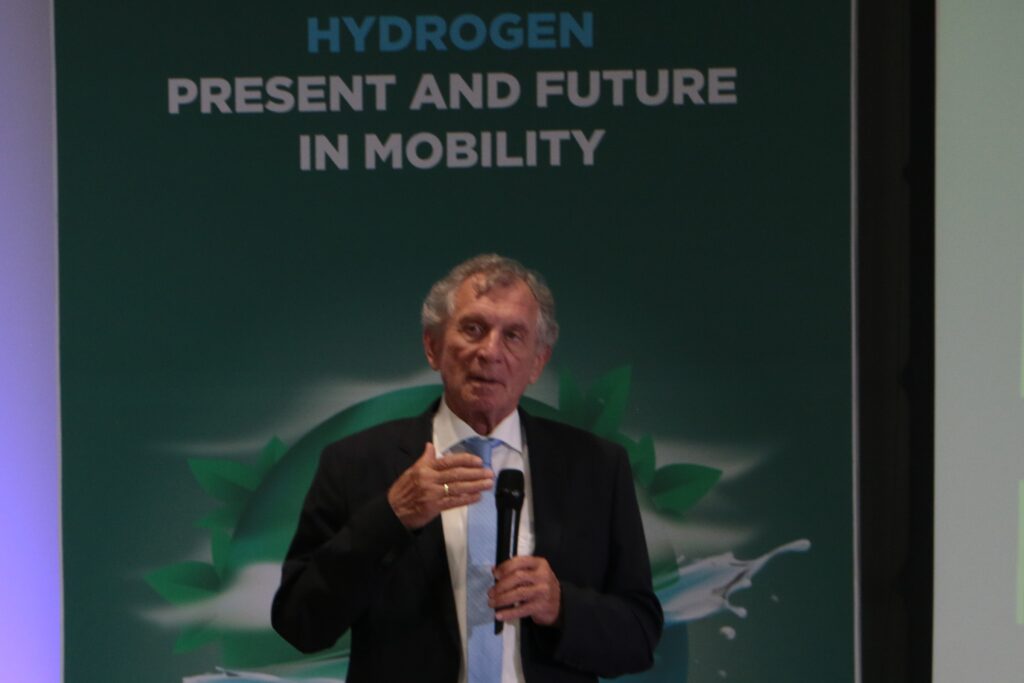
Thirty international and domestic large companies, enterprises and research workshops working in Hungary in hydrogen technology and related developments have also exhibited at the V4 PLUS international conference, hydrogen technology presentation and career guidance professional day entitled “Hydrogen – present and future in mobility”. The two-day event at the ZalaZone Automotive Center focused on ongoing developments in hydrogen technology, V4 strategies, major national projects, H2 mobility processes, and the training of technology professionals. On the day of the event conference (June 9), the leaders of the Hydrogen Associations of the Visegrád countries presented the novelties of the sector, after which the participants could listen to presentations on the European hydrogen-based mobility, hydrogen technology sector and its growth. István Lepsényi emphasized in the greeting of the President of the Hungarian Hydrogen Technology Association; “Our world has changed drastically in recent years, but especially this year, because of the war. transition to energy. One of the most spectacularly evolving areas of this competition is hydrogen technology and related mobility. In her opening remarks, Daniella Deli, Undersecretary of State for Energy and Climate Policy at the Ministry of Technology and Industry, emphasized the importance of developing new legal environments, certification schemes and guarantees of origin related to hydrogen technologies, education and domestic developments. He said „the government is currently working on both the necessary changes within the legislative process and the incentive schemes.” The first package of legislative proposals is expected in the second half of this year, and the first calls for proposals will be published in the autumn The representative of the Minister of Industry and Trade of the Czech Republic, Jozef Síkela, emphasized the importance of international co-operation and the importance of common thinking. Said; „We can really learn a lot from the automotive industry in the development of hydrogen technology because of the amazing development and international cooperation in the sector.” He emphasized that the ZalaZone track, which will host the conference, is a good illustration not only of the growth of the Hungarian automotive industry, but also of the developments and innovations in the sector. Jan Weiterschütz, a special adviser to the Slovak Ministry of Economy and Minister Richard Sulík, explained that Slovakia, like Hungary, has limited opportunities for hydrogen production, but sees a very good chance of creating a hydrogen network connecting the V4 countries. He said “there are still many steps to be taken to reach the 2030 climate targets, but that can be done in partnership. He added that the current conference is also an important starting point for this work. Tomoho Umeda, President of Hydrogen Poland and the Chamber of Commerce, highlighted that we are facing the biggest historical crisis, the global energy crisis, in which no one can predict the future of their own business or economy. In this situation, it is very important to be able to pinpoint the role of hydrogen. He said that hydrogen is not the end product, the solution, but something that helps us store and transmit energy from renewable sources to end users. He added that hydrogen-related developments and technologies are already available and we need to apply them, as we are already at a disadvantage. Jae-do Moon, President of the World Hydrogen Association, and Maja Bakran Mrcich, Director-General for Mobility and Transport of the European Commission, welcomed the conference in a video message.

FOUR COUNTRIES ON HYDROGEN – A COMMON INTENTION Read More »

HYDROGEN – PRESENT AND FUTURE

Recent events, rising energy prices, are accelerating the transition to green and renewable energy. The basis of the sovereignty of every country is to produce as much energy as possible domestically and to obtain imports from as many sources as possible. And this will mobilize a lot of resources in the coming years, so there will be countless ideas, innovations and developments competing for the money. One of the most spectacular areas of this competition is mobility, as technical progress in this area, various vehicle technologies and their availability on the market appear very quickly from week to week. There are no ready-made business models in the field of hydrogen mobility yet, so learning about common thinking, each other’s plans and existing good practices is extremely important for Hungary. As the study of the Green Truck Project prepared by the Association points out, hydrogen-based mobility cannot be solved as a country’s own “internal affair”: expensive charging infrastructure and the utilization of expensive vehicles should be maximized as early as possible, and this should only be it is possible to create well-functioning hydrogen corridors and then networks, at least in the neighboring EU Member States, but even more so throughout the EU. For this reason, it is advisable to get to know at least the development plans of the hydrogen filling infrastructure in the neighboring countries and to coordinate them as far as possible. This is required not only by the relevant EU regulations (eg the Alternative Fuel Infrastructure Directive) but also by common sense. The Hungarian Hydrogen Technology Association with the Ministry of Technology and Industry will organize the V4 PLUS international conference and hydrogen demonstration “Hydrogen – present and future in mobility” on the ZalaZone test track and event center on June 8 and 9, 2022. professional day. The aim of the event is for the participants to get acquainted with the current developments in the Hydrogen sector, the most significant V4 national projects and strategies in progress. The conference will focus on the processes taking place in the field of H2 mobility, the fastest growing areas of the hydrogen technology sectors. The exhibiting large companies and research workshops present their pioneering ideas and innovations that provide a competitive advantage. It is extremely important that the training of professionals dedicated to technology is continuously strengthened, therefore on the first day of the event (June 8) the Hungarian Hydrogen Technology Association organizes professional lectures for universities and students participating in their training, Zala Zone test track and related exhibition crawl. On the day of the conference (June 9), following the opening speech of the Minister of Technology and Industry, the Hydrogen Associations of the Visegrad countries will present the sector, followed by presentations on the European hydrogen-based mobility, hydrogen technology sector and possible growth. other cross-border cooperation programs. Invitees can be active participants in the panel discussions, view our outdoor and indoor industrial exhibition and try out a wide variety of hydrogen-powered vehicles at the Zalazone test track.

HYDROGEN – PRESENT AND FUTURE Read More »