News

A Toyota növeli a hidrogénhajtás hatékonyságát

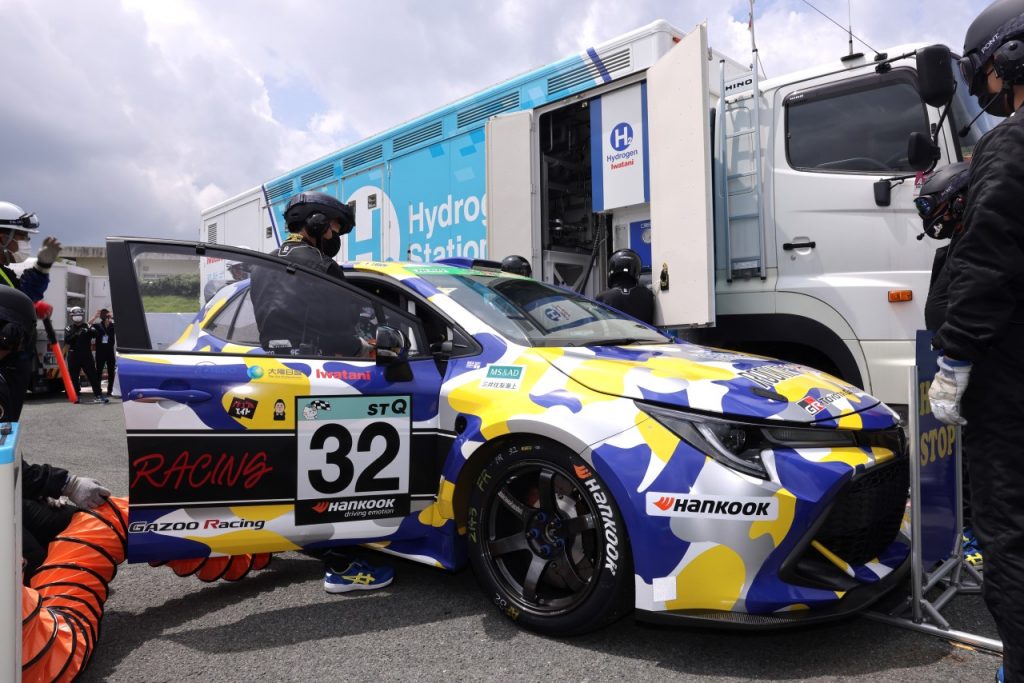
A Toyota Motor Corporation a szupravezetés jelenségének autóipari alkalmazásán dolgozik. Az innovatív megoldást a folyékony hidrogén üzemanyag-ellátó rendszerben tesztelték a GR Corolla versenyautóban. A projekt célja a hidrogénhajtású rendszerek hatékonyságának növelése. A Toyota GR Corolla versenyautó 2021 óta mobil technológiai laboratóriumként szolgál a hidrogénhajtás fejlesztésében. A japán Super Taikyu Series bajnokságban való részvétel lehetővé teszi az új megoldások tesztelését extrém körülmények között, nagy terhelés mellett és változó üzemi hőmérsékleten. A szerzett tapasztalatok pedig felgyorsítják a hidrogéntechnológia fejlődését. Kevesebb energiaveszteség és nagyobb hatékonyság Kívülről nézve a GR Corolla nem árulja el, milyen jelentős technológiai változások zajlanak tesztről tesztre. 2021-ben ez volt az első hidrogénhajtású autó, amely versenykörülmények között állt helyt. Két évvel később először használtak folyékony hidrogént üzemanyagként, a legutóbbi, Fuji Speedwayen rendezett futamon pedig a mérnökök a szupravezetés alkalmazhatóságát vizsgálták a hidrogénhajtású rendszerben. Ez a fizikai jelenség azt jelenti, hogy bizonyos anyagok elektromos ellenállása kritikusan alacsony hőmérsékleten teljesen megszűnik. Folyékony hidrogén esetén ez az érték körülbelül -253 Celsius-fok, ami természetes környezetet teremt a szupravezető anyagok működéséhez.   A hidrogénhajtású GR Corolla esetében a mérnökök 2023 óta dolgoznak ezen a technológián. A Fuji versenypályán a Toyota mérnökei a szupravezetés tulajdonságait tesztelték az üzemanyag-szivattyút meghajtó villanymotor szerkezetében. Az egységet a hidrogéntartályban helyezték el, és közvetlenül a kriogén környezetben működik, így nincs szükség külön hűtőrendszerre. Szupravezető körülmények között az áram veszteség nélkül, elektromos ellenállás hiányában áramlik, ami nagyobb hatásfokot és kisebb hőtermelést eredményez. Kompakt felépítés és nagyobb hidrogéntartály A szupravezető motor alkalmazása lehetővé tette a folyékony hidrogén szivattyú méretének és tömegének csökkentését. Az alkatrészek üzemanyagtartályon belüli integrációja hatékonyabb helykihasználást és kisebb, elpárolgásból származó üzemanyagveszteséget eredményez. A tartály kapacitását is sikerült 150-ről 300 literre növelni. Ez az innovatív megoldás a jövőben hozzájárulhat a folyékony hidrogénnel működő járművek hatótávolságának növeléséhez és szerkezetük egyszerűsítéséhez. „A folyékony hidrogénnel hajtott járművek szorosan kapcsolódnak a szupravezető technológiához, amely kulcsfontosságú a jövő szempontjából. A konstrukció optimalizálása – beleértve a tartály kapacitásának növelését, a motor tartályon belüli integrációját és a hidrogénveszteség csökkentését – lehetővé teszi a tömegcsökkentést és a hatékonyság növelését. A cél a technológia további fejlesztése szoros együttműködésben japán cégekkel, valamint a partnerhálózat bővítése” – mondta Naoaki Ito, a GR járműfejlesztési divíziójának hidrogénmotoros projektet felügyelő vezetője. A Toyota mérnökei számára a megbízhatóság az elsődleges szempont Bár a szupravezetés első sikeres autóipari alkalmazása fontos lépés a hidrogénrendszerek hatékonyságának növelése felé, a projekt továbbra is a kutatás és tesztelés szakaszában van. A mérnökök a szélsőségesen alacsony hőmérsékleten működő alkatrészek tartósságára és a rendszer különféle üzemi körülmények közötti stabilitására koncentrálnak. Az innovatív technológia illeszkedik a Toyota hosszú távú stratégiájába, amely a különböző alacsony kibocsátású megoldások, köztük a hidrogénhajtású rendszerek párhuzamos fejlesztését tűzte ki célul.

A Toyota növeli a hidrogénhajtás hatékonyságát Read More »
Sustainable Transport Investment Plan (STIP)

5th November in Brussels, the European Commission presented its Sustainable Transport Investment Plan (STIP) strategy to accelerate the energy transition of aviation and maritime transport sectors.   Hydrogen Europe announced the events in a statement, stressing that it welcomes the STIP for its specific focus on unlocking resources to help projects make the final investment decision, recognizing the importance of decarbonizing the maritime and aviation sectors with all available technological solutions. Laurent Donceel, Director of Transport at Hydrogen Europe commented: “Today’s communication rightly identifies that a comprehensive funding approach is necessary to help projects reach FID and sign durable offtake agreements. Yet, the price difference between renewable and low-carbon fuels and their fossil competitors remains too high and more efforts are needed to narrow the gap.”  Under the plan, the EU is expected to mobilise at least €2.9 billion until the end of 2027: InvestEU will mobilise at least €2 billion for sustainable alternative fuels until 2027, which will help bridge financial gaps, The Commission will allocate €300 million by end of this year to support the production of hydrogen for sustainable aviation (SAF) and maritime (SMF) fuels through the European Hydrogen Bank. The Commission, through Horizon Europe, will support more R&I projects with a budget of €133 million. The Commission will mobilise €153 million for synthetic aviation fuel projects and €293 million for maritime fuel projects under the Innovation Fund. An eSAF Early Movers Coalition pilot project of committed Member States will be launched by end of 2025 with a stated target budget of at least €500 million for synthetic aviation fuel projects.  The new instruments put in place by STIP also include an intermediary mechanism connecting fuel producers and buyers to provide revenue certainty and de-risk investments, which along with the funding listed above will not only help decarbonise the aviation and maritime sectors but also reduce imports of fossil fuels, improve self-sufficiency and energy security for civil and military use, and also launch an innovative and competitive new industry that will help European jobs and growth numbers.    Boosting the production and uptake of renewable and low-carbon fuels is essential for the resilience and decarbonisation of Europe. Today’s proposals can provide real political momentum for these fuels.  The association and its members now call on the European Commission to promptly implement STIP, notably through the upcoming review of the ETS Directive in 2026, and call upon national governments to seize this opportunity to develop a resilient energy system that can enable the decarbonisation of aviation and waterborne transport. Hydrogen Europe looks forwards to seeing this topic addressed at the meeting of transport ministers on 4 December.

Sustainable Transport Investment Plan (STIP) Read More »

Hydrogen Fuel Cells Power Airlander 10

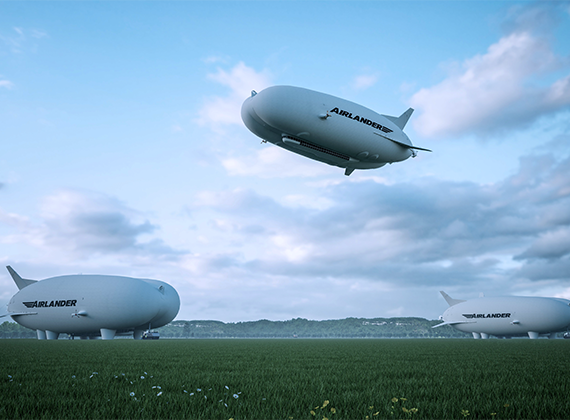
A New Era for Sustainable Airships When you imagine a zero-carbon future in the skies, you probably think of sleek electric jets or swarms of drones. But what if an old-school hybrid airship got a high-tech reboot? On 10 November 2025, Hybrid Air Vehicles and ZeroAvia announced they’re teaming up to outfit the Airlander 10 with four cutting-edge hydrogen-electric propulsion systems. Their goal is a bold one: slash operational emissions by up to 90% and put zero-emission technology front and center in short-haul aviation. It’s easy to picture airships as relics—those grand zeppelins of yesteryear fading from view after headline-grabbing mishaps. But HAV has breathed new life into the concept, swapping out canvas and wood for modern composites, digital flight controls and clean power sources. What started as a military surveillance testbed in the 2010s morphed into a commercial contender thanks to a mix of public grants and private cash. Now, with ZeroAvia on board, it’s poised for its greenest chapter yet. Decoding the Technology At the heart of this venture are hydrogen fuel cells paired with electric motors. High-pressure hydrogen tanks feed the fuel cells, where hydrogen meets air and sparks off electricity—emitting nothing but pure water vapor. That juice powers four whisper-quiet propellers, a massive upgrade over diesel-electric rigs when you’re cruising over cities or sensitive wildlife areas. About 60% of the Airlander 10’s lift comes from helium buoyancy; the rest is all about aerodynamics once you’re moving forward. The upshot? Way less energy burned per ton-mile compared to your average turboprop. And while battery-only designs wrestle with heavy packs, this hybrid approach leans on hydrogen’s superior energy density for longer hops. On the ground, the partnership is already pushing fresh ideas in hydrogen hubs and refueling. Think ruggedized dispensers that slot into existing aviation fuel farms, safe storage for high-pressure tanks, and slick protocols so turnarounds are fast and fail-safe. Nail these details, and you’ve got a template airports around the world can replicate. Whether you’re an aviation buff or an investor eyeing the hottest sustainable energy frontier, this collaboration feels like a turning point. It’s proof that hydrogen fuel cells aren’t just lab curiosities but ready to shine on radical platforms like the Airlander 10. If all goes well, we might soon see silent, buoyant giants crisscrossing the globe, leaving only water vapor and lower emissions in their wake.

Hydrogen Fuel Cells Power Airlander 10 Read More »

Project Development Assistance (PDA) for Hydrogen Valleys 

Apply by 19 September 2025 The Call for Applications for the Project Development Assistance (PDA) programme for Hydrogen Valleys is open until 19 September 2025. Projects located in the EU and in countries associated with Horizon Europe are eligible. The PDA services consist of tailored expert assistance, free of charge, to help advance Hydrogen Valleys in commercial, technical, regulatory and valley governance aspects towards the Final Investment Decision (FID) and will be carried out by the consulting firm Roland Berger with its technical subcontractor Worley. The application process is explicitly designed to be low-effort and can be completed in a very short amount of time: The application documents to be handed in consist of a compilation of existing documents and the completion of a short application form.  With this Call for Applications, up to 15 PDAs in total will be awarded to eligible Hydrogen Valleys in two PDA tracks: PDA light (6 weeks): Support for early-stage projects to develop a pre-feasibility concept PDA plus (12 weeks): Modular assistance to advance more mature projects towards FID, including a detailed feasibility roadmap 🗓️ Application deadline: September 19 2025 at 23:59 CET🔗 Application website: PDA Programme | PDA – H2V📺 Recording of the Info Day: Info Day on the Call for Applications | PDA – H2V📩 Send questions until September 12 to: [email protected]

Project Development Assistance (PDA) for Hydrogen Valleys  Read More »

The Global Hydrogen Mobility Alliance (GHMA) officially launched

CEOs from the world’s leading energy, automotive, and technology companies have come together to issue a strong and unified message to European policymakers: Hydrogen mobility is essential to Europe’s climate goals, industrial competitiveness, and strategic resilience – and urgent action is needed on infrastructure buildout. In a joint letter addressed to EU and Member State leaders, the CEOs urge policymakers to firmly position hydrogen mobility at the heart of Europe’s clean transport and industrial strategies. The letter has been signed by executives from more than 30 companies, from multinationals to smaller vendors that combined span the entire hydrogen mobility ecosystem. It calls for immediate and targeted policy support to unlock investment and scale deployment of hydrogen vehicles and infrastructure across the EU. CEOs point to three critical issues: Hydrogen mobility is a strategic imperative: Complementing battery-electric vehicles, hydrogen technologies are vital to ensuring a diversified, resilient, and cost effective decarbonisation of road transport. A combined approach could save Europe between 300-500 billion euros in infrastructure costs by 2050. Two mobility infrastructures will be cheaper for Europe than relying on just electrification. Hydrogen mobility is a vector for jobs and industrial growth: Europe’s existing industrial strengths in automotive and advanced manufacturing can be leveraged to lead in hydrogen technology, providing up to 500,000 jobs by 2030. Hydrogen mobility unlocks critical energy system synergies: Hydrogen enables demand aggregation, supports hard-to-abate sectors, and drastically reduces renewable energy waste. Despite progress, the CEOs warn that hydrogen mobility in Europe will stagnate unless a more coordinated and pragmatic policy framework is implemented to support the rollout of the necessary infrastructure and achieve the scale needed for the hydrogen mobility market to flourish. For this to happen, hydrogen mobility must form a central element of strategic initiatives such as the Sustainable Transport Investment Plan and Clean Industrial Deal, while the ongoing push to simplify EU regulations can help drive down the cost and complexity of building hydrogen mobility infrastructure. A Call to Action: A Call to Action: GHMA_CEO-Letter__EU_FINAL Accelerate Hydrogen Mobility for Europe’s Sustainable, Competitive and Resilient Industrial Future.Letter for Ursula von der Leyen

The Global Hydrogen Mobility Alliance (GHMA) officially launched Read More »

New State aid framework enables support for clean industry

The newly published Clean Industrial Deal State Aid Framework (CISAF) reflects industry’s call for coherence and will contribute to ensuring the Clean Industrial Deal (CID) does not become an empty promise. The text commendably targets increased flexibility, broad thresholds, generous cumulation, priority for renewables, recognition for electricity produced from renewable fuels of non-biological origin (RFNBOs), with flexibility on low-carbon hydrogen too. There is also a concerted alignment with the Net-Zero Industry Act (NZIA) to ensure that system and supply-chain resilience are prioritised, bringing additional coherence. Jorgo Chatzimarkakis, Hydrogen Europe’s CEO, stated: “DG COMP has sent a strong signal that Europe is serious about investment in clean tech and is ready to take its seat as a global energy transition leader. Higher aid ceilings for hydrogen production and use, flexible funding schemes, and accelerated depreciation together will help unlock the next wave of hydrogen projects and keep manufacturing capacity in Europe. It is essential that the Commission dedicates new financial resources for the sector to make this happen.” The new framework simplifies and enhances current provisions: Aid ceilings rise to 100% of eligible costs for RFNBO production via competitive bidding and to 60% for industrial hydrogen use when at least 40% per cent of the mix is renewable. Introduction of first RFNBO quotas. Accelerated depreciation will help end-users book hydrogen equipment quickly, whilst Member States can match foreign subsidies for strategic factories. Cumulation rules will allow CISAF to stack with the Innovation Fund, Important Projects of Common European Interest (IPCEI), Connecting Europe Facility (CEF), and other instruments. Now, the entire hydrogen value chain, from electrolysers and storage to hydrogen-ready DRI reactors, is in scope. It is crucial that all uncertainties around permissible state aid are lifted to ensure the new rules can efficiently make clean-tech manufacturing and energy-intensive industries competitive and sustainable. The Commission must now think long-term and align state aid with investment horizons: CISAF expires in 2030, well before most hydrogen assets reach mid-life. With no new EU-level cash and diverging national budgets, CISAF risks becoming a blunt instrument. Red tape must also be cut, especially for large projects which face extra administrative steps when they trigger funding-gap notifications. These measures will ensure the final CISAF becomes the catalyst Europe needs to build a resilient and competitive hydrogen economy. For more info: European Commission’s press release: New State aid framework enables support for clean industry Hydrogen Europe’s reply to CISAF public consultation Hydrogen Europe members can access further analysis in HE’s Members Only Area (MOA) 

New State aid framework enables support for clean industry Read More »

Nearly €1 billion awarded to boost development of renewable hydrogen

Today, the Commission announced the selection of 15 renewable hydrogen production projects for public funding across the European Economic Area (EEA). The projects, located across five countries, are expected to produce nearly 2.2 million tonnes of renewable hydrogen over ten years, avoiding more than 15 million tonnes of CO₂ emissions. The hydrogen will be produced in sectors such as transportation, the chemical industry, or the production of methanol and ammonia. They will receive a total of €992 million in EU funding, from the Innovation Fund sourced from the EU Emissions Trading System (ETS). The winning bidders, awarded after the second European Hydrogen Bank (EHB) auction, will produce the renewable hydrogen in Europe with a subsidy that will help to close the price difference between their production costs and the market price and accelerate the deployment of cleaner fuels. The auctions of the European Hydrogen Bank contribute to scaling up renewable hydrogen, which in turn will help replace natural gas, coal and oil in hard-to-decarbonise industries and transport sectors. Producing more renewable hydrogen will decrease the use of fossil fuels on our continent and increase the EU’s energy independence and positively impact security, jobs and the decarbonisation of European industry. Of the selected projects, 12 are committed to producing renewable hydrogen with fixed premium support between €0.20 and €0.60 per kilogramme. For the first time, the auction provided a dedicated budget for hydrogen producers with off-takers in the maritime sector, which are entities using the hydrogen produced by the project for carrying out or making use of bunkering activities. This has resulted in the selection of three bids receiving €96.7 million in grants. These projects will require between €0.45 and €1.88 per kilogramme. Each subsidy for the 15 projects ranges from €8 million and €246 million over a period up to 10 years. ** Calculated based on the 2021-2025 ETS benchmark of 6.84 tons CO2e/tH2, not taking into account additional carbon abatement due to substitution effects in the H2 end use application  In parallel, Spain, Lithuania, and Austria are allocating up to €836 million in national funding for projects in their countries through the ‘Auctions-as-a-Service’ feature. This allows Member States to identify and fund eligible projects in their territories that meet the auction’s qualification criteria but cannot be funded by the Innovation Fund due to budgetary limitations. ‘Auctions-as-a-service‘ is open to all Member States, enabling them to benefit from the EU-level auction platform and award national funding to additional projects with simplified procedure.  Next Steps The selected projects will now be invited to prepare their grant agreement with the European Climate, Infrastructure and Environment Executive Agency (CINEA). Agreements are expected to be signed by September/October 2025. Signed projects are required to reach financial close within a maximum of two and a half years after signature and to start producing renewable hydrogen within a period of 5 years. They will receive the fixed premium subsidy for a period of up to ten years for certified and verified renewable hydrogen production. As announced in the Clean Industrial Deal, a third European Hydrogen Bank auction is planned for end 2025 with a budget of up to €1 billion. The Commission will soon also launch the Hydrogen Mechanism under the European Hydrogen Bank. This online platform will bring together buyers and sellers and enable market participants to share information and find potential commercial partners. Background With an estimated total budget of €40 billion from the EU Emissions Trading System for the period from 2020 to 2030, the Innovation Fund creates financial incentives for companies and public authorities to invest in cutting-edge net-zero technologies and support Europe’s transition to climate neutrality.  The European Hydrogen Bank facilitates the EU’s domestic production and imports of renewable hydrogen that qualifies as Renewable Fuels of Non-Biological Origin (RFNBO), meaning it is generated using renewable electricity and meets the EU’s sustainability criteria.  It supports the EU target to produce 10 million tonnes of domestic renewable hydrogen by 2030, as set out in the REPowerEU plan. It aims to unlock private investment in the EU and in third countries by addressing investment challenges, closing the funding gap, and connecting future renewable hydrogen supply to consumers. In its first auction in 2023, the Innovation Fund awarded nearly €700 million in grants to support 6 projects.

Nearly €1 billion awarded to boost development of renewable hydrogen Read More »

Installation of fast and cost-effective hydrogen filling stations begins on Europe’s main roads

Toyota Motor Europe (TME) has signed an agreement with Hydrogen Refueling Solutions and ENGIE to build a fast, versatile and cost-effective hydrogen refueling infrastructure. The revolutionary Twin Mid Flow technology enables faster refueling and significantly lower investment costs for hydrogen refueling stations. The partnership aims to support the hydrogen industry in meeting the targets set by the EU Alternative Fuels Infrastructure Regulation (AFIR), which requires the construction of publicly accessible hydrogen refueling stations every 200 km along the Trans-European Transport Network (TEN-T) by 2030. In Hungary, this concerns the roads marked M0, M1, M2, M3, M5 and M7. The spread of environmentally friendly hydrogen-powered cars and commercial vehicles that emit clean water as a by-product could be given a huge boost by the fact that, according to plans, within just 5 years, by 2030, a hydrogen charging network will be built on Europe’s busiest highways at a maximum distance of 200 kilometers from each other. The new technology planned to be used to build the charging stations will not only drastically reduce the cost of construction, but will also enable much faster charging than now, and there will be no need for separate stops for cars and trucks. 40-ton trucks will be able to refuel 600 kilometers of fuel in 8 minutes and 900 kilometers in 12 minutes. Toyota Motor Europe has signed an agreement with Hydrogen Refueling Solutions (HRS) and ENGIE to introduce the next generation of hydrogen refuelling systems. The new, faster and more cost-effective solution will be piloted as part of the EU-funded RHeaDHy project, which focuses on accelerating infrastructure deployment.One of the challenges in expanding hydrogen infrastructure is the need for hydrogen dispensers that can refuel both light and heavy-duty fuel cell vehicles more quickly. Revolutionary new charging technologyThe new Twin Mid Flow technology addresses this challenge by incorporating a dual nozzle with a higher flow rate, allowing one hydrogen dispenser to refuel heavy-duty vehicles in less than 10 minutes and light-duty vehicles in less than 5 minutes. This innovation eliminates the need for two different types of dispensers at each refuelling station.The practical advantage of this is that a 40-ton truck can be refueled with hydrogen for a range of 600 kilometers in just 8 minutes, and for a range of 900 kilometers in just 12 minutes. Lower installation costsThe installation costs of such hydrogen refuelling stations will be significantly lower, which will contribute to accelerating their deployment, in line with the target set in the European Union’s Alternative Fuels Infrastructure Regulation (AFIR) to install publicly accessible hydrogen refuelling stations every 200 kilometres on the TEN-T networks by 2030. As a leading developer of hydrogen technology, Toyota is playing a major role.Under the agreement just signed, Toyota will provide a test unit and a truck equipped with Twin Mid Flow technology. Hydrogen Refuelling Solutions and ENGIE will develop a new generation of hydrogen refuelling stations compatible with this innovation, which will be tested in the RHeaDHy project from the fourth quarter of 2025.“To contribute to the growth of hydrogen ecosystems, Toyota is already working with business partners who are innovating a wide range of zero-carbon applications using our advanced fuel cell systems. The development of Twin Mid Flow technology is the next step in our efforts to drive the growth of hydrogen ecosystems. We are excited about this new partnership,” said Thiebault Paquet, Toyota’s Vice President of R&D for Europe. “This strategic partnership between Toyota Motor Europe and ENGIE represents a decisive step in the innovation of hydrogen refueling infrastructure. By combining our expertise, we will accelerate the deployment of hydrogen refueling stations in Europe and around the world, reduce refueling times, and make stations more accessible and cost-effective. Together, we are laying the foundations for a future where hydrogen will play a central role in decarbonizing transport worldwide,” added Hassen Rachedi, CEO and founder of Hydrogen Refueling Solutions. As the project coordinator and a research center with expertise in refueling simulation and refueling protocols, ENGIE is proud to join forces with Toyota Motor Europe and HRS to leverage the RHeaDHy project. By promoting high-flow refueling solutions, this partnership will strengthen the hydrogen ecosystem and accelerate the transition to cleaner energy. Together, we will set new standards for sustainable mobility and strengthen the role of hydrogen in decarbonizing transport,” says Quentin Nouvelot, Head of ENGIE’s H2 Mobility Research Program.(The hydrogen dispensers shown in the images still represent current technology.) Hydrogen Refuelling Solutions (HRS)Hydrogen Refuelling Solutions is a leading manufacturer of high-capacity hydrogen refuelling stations. HRS offers a complete and unique range of modular and scalable stations, manufactured at its industrial site in Grenoble, France. It also has a test site, the only one of its kind in Europe, dedicated to testing and piloting stations and developing future products and solutions for the hydrogen mobility market. ENGIEENGIE is a global reference in low-carbon energy and services. With 97,000 employees, customers, partners and stakeholders, the group strives every day to accelerate the transition to a carbon-neutral economy through reduced energy consumption and more environmentally friendly solutions. Inspired by its objectives, ENGIE aligns economic performance with a positive impact on people and the planet, building on its key businesses (gas, renewables, services) to offer competitive solutions to its customers. The coordinator of the RHeaDHy project, ENGIE Lab CRIGEN, ENGIE’s research and innovation center, is investigating advanced energy technologies in several areas, in particular hydrogen. It contributes to the development of hydrogen production, storage and distribution solutions to support the energy transition. RHeaDHyThe EU-funded RHeaDHy project (Refuelling Heavy Duty with very High flow Hydrogen) aims to develop high-performance hydrogen refueling stations for heavy-duty vehicles. The project focuses on creating and testing new protocols that will allow trucks operating with 700 bar hydrogen to refuel 100 kg of hydrogen in 10 minutes.This project is part of the EU’s efforts to decarbonise freight transport and to support the market for hydrogen-powered trucks, contributing to this by building a robust refuelling station network. The RHeaDHy project was funded by the Clean

Installation of fast and cost-effective hydrogen filling stations begins on Europe’s main roads Read More »

The future of European competitiveness

The final text of The Future of European Competitiveness report was officially presented today by former Italian Prime Minister Mario Draghi and incoming European Commission President Ursula von der Leyen. The report, which was highly anticipated, involved extensive consultations with stakeholders across all sectors of society to identify major barriers to competitiveness in Europe, and offers concrete recommendations to tackle obstacles to innovation, high energy prices, funding needs, regulatory simplification, and the urgent need for digitalisation and defence capacities.     Hydrogen Europe CEO Jorgo Chatzimarkakis credited Mr Draghi’s work, commenting: “This report is exactly what Europe needs today: a strategic and concrete — and perhaps radical — approach to address climate change, technological disruption, energy costs, and Europe’s economic resilience. It once again highlights that an EU Clean Industrial Deal, which will help Europe to decarbonise while remaining competitive, must be a top priority of this new EU cycle. Decarbonisation can be a catalyst, rather than a hindrance, for Europe’s industrial revival, with hydrogen and its technologies key elements in this transformation.”   Hydrogen is recognised in the report as a transformative technology that will play a pivotal role in driving European competitiveness. Due to the structural changes that Europe will face in the upcoming decade, the hydrogen sector should build upon and extend frameworks that have proven to be effective, such as the Hydrogen Bank and Hydrogen Valleys, but also bring elements of novelty and rationalisation when it comes to legislation, governance and the financial firepower to achieve ambitions.   Daniel Fraile, Chief Policy Officer at Hydrogen Europe, added: “We are happy to see that the report brings a technology-neutral approach to rebuilding EU competitiveness, recognising hydrogen’s importance to decarbonisation alongside other solutions. Hydrogen Europe advocates for a strong, common effort to provide the financial means to this unprecedented transition and to consider all clean hydrogen technologies as crucial for revamping the EU’s industrial core. Pooling investment capacity across various levels of the EU will be essential to deploying the clean tech needed to reach climate and energy targets.”   Hydrogen Europe is calling on the EU institutions, particularly the upcoming European Commission and Member States, to demonstrate strong commitment and synergies to push for clear, ambitious objectives to position hydrogen as a cornerstone in energy, industry, and competitiveness policies for the next political cycle. This must be done cooperatively with other key net-zero sectors.

The future of European competitiveness Read More »