

The Hydrogen Europe statement on RED III has been published
The Hydrogen Europe statement on RED III has been published
The Hydrogen Europe statement on RED III has been published Read More »
The Hydrogen Europe statement on RED III has been published
The Hydrogen Europe statement on RED III has been published Read More »

The European Commission has greenlit the fourth wave of Important Projects of Common European Interest (IPCEI) to support the hydrogen value chain. This IPCEI, known as Hy2Move, focuses on hydrogen mobility and marks the end of the Hydrogen IPCEI programme first launched back in 2019. Previous waves include Hy2Tech (July 15, 2022), Hy2Use (September 21, 2023), and Hy2Infra (February 15, 2024). Together, these initiatives aim to raise over €43 billion from a blend of public and private funds, supporting more than 120 projects involving nearly 100 European companies. Hy2Move will see Estonia, France, Germany, Italy, the Netherlands, Slovakia, and Spain collectively inject up to €1.4 billion in public funding from various national sources. This significant public investment is expected to attract at least €3.3 billion in private capital, resulting in a total financial effort of €4.7 billion. Eleven companies, with the support of small and medium-sized enterprises (SMEs), will focus on 13 projects spanning several key segments: Development of mobility and transport applications: Integrating hydrogen technologies into various transport modes (road, maritime, aviation), including fuel cell vehicle platforms for buses and trucks; High-performance fuel cell technologies: Generating sufficient power to propel ships and locomotives using hydrogen; Next-generation on-board storage solutions: Creating lightweight, robust hydrogen tanks for aircraft to ensure safety and efficiency; Technologies for hydrogen production for mobility: Supplying hydrogen refuelling stations on-site with pressurized, 99.99% pure fuel-cell-grade hydrogen. Hydrogen Europe welcomes this latest announcement as it represents another significant commitment to scaling up hydrogen capabilities that will facilitate the decarbonisation of the mobility sector. Jorgo Chatzimarkakis, CEO of Hydrogen Europe, commented: “We are delighted to see the successful final chapter of the hydrogen IPCEIs. It is now crucial that Member States make the necessary resources available for all waves and establish the right conditions for these projects to be delivered as soon as possible.” Moving forward, Member States must now allocate and disburse the financial resources for all projects. Many projects from the previous waves have yet to receive their funding. Hydrogen Europe calls for the IPCEI mechanism to be renewed and broadened in scope, with its processes streamlined, making it a robust instrument with which, alongside other state aid instruments across Member States, the next Commission may help support its climate and competitiveness goals. The original news
The European Union has approved 1.4 billion euros in IPCEI support Read More »
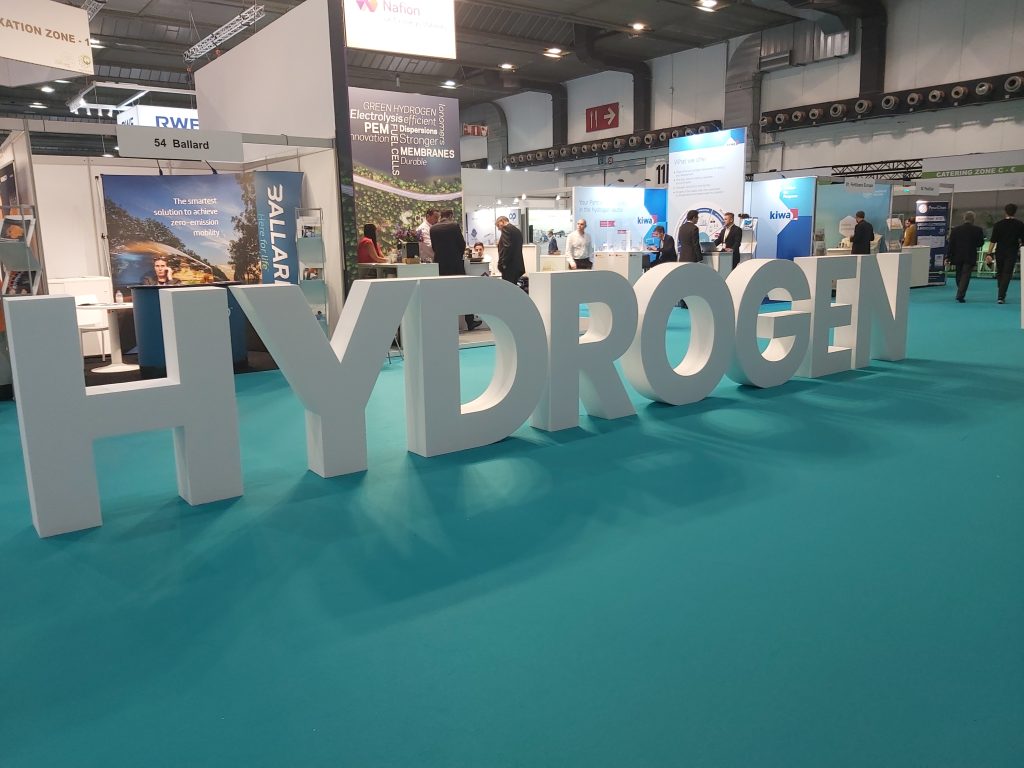
The act sets a specific target, aspiring to manufacture at least 40% of the EU’s net-zero technologies within the Union by 2030. This initiative marks a significant step towards fostering innovation and sustainability in Europe’s industrial landscape.
Net Zero Industry Act – 3 fundamental Read More »
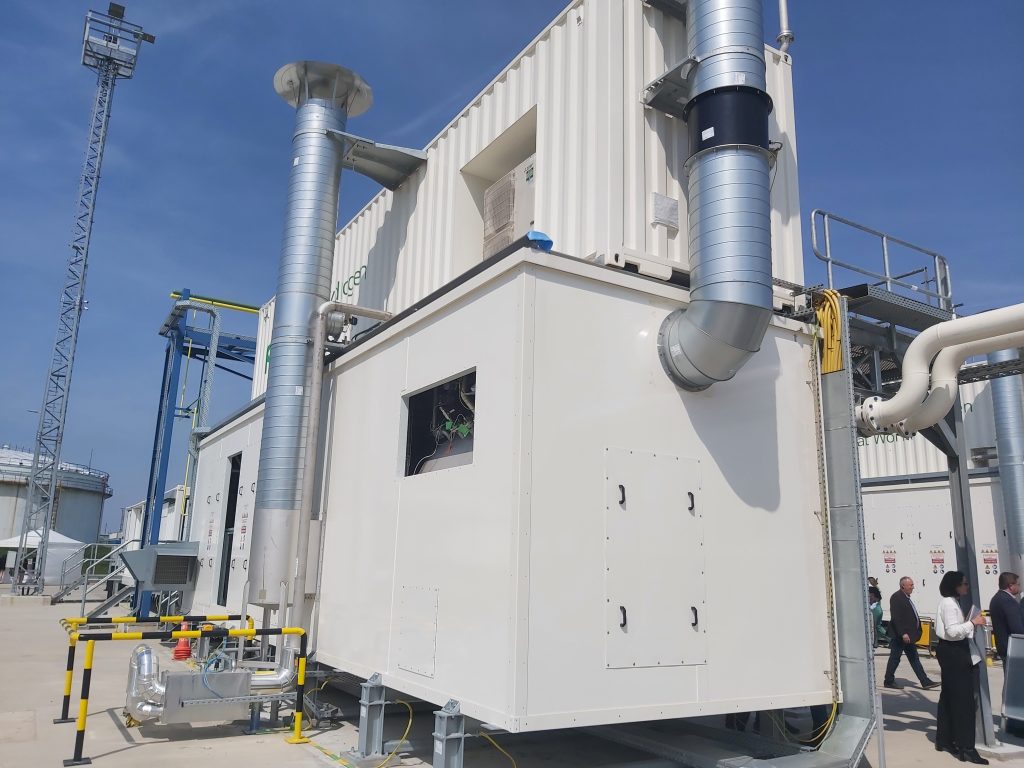
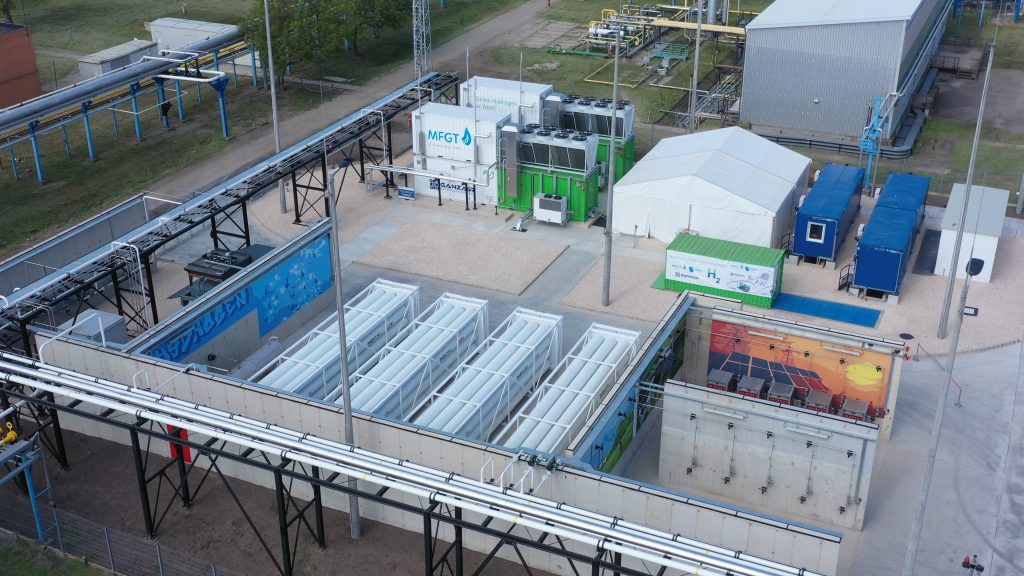
MOL STARTS PRODUCTION OF GREEN HYDROGEN
MOL STARTS PRODUCTION OF GREEN HYDROGEN Read More »
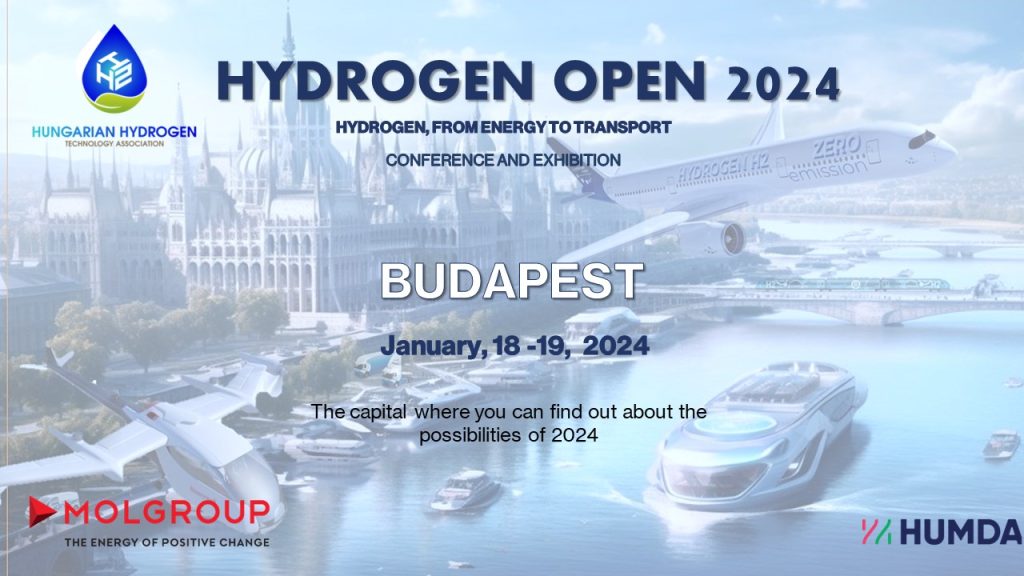
HYDROGEN OPEN 2024 – More than 100 industry participants, leading spokespeople of 5 countries, EU and domestic legislators in one location. 18th – 19th of January the event will unite key stakeholders, including hydrogen tech companies, innovators, corporates seeking innovation, and experts. Hydrogen open 2024 – PROGRAM The two-day conference examines hydrogen technology solutions, possibilities and expected changes in energy and transport in two important areas. This important event for Central Europe aims to bring the region’s managers, regulators and companies working in the field of hydrogen technology to a unified platform. Together, we will explore which factors contribute to green hydrogen development, the growth potential of hydrogen as a fuel source in transport, obstacles and risks. Additionally, we will delve into the ever-growing importance of hydrogen technologies in achieving zero-emission goals, opportunities within Europe, and access to valuable European financing resources. This conference promises to be a pivotal gathering of key stakeholders within the hydrogen industry from the EU, including innovators, corporates seeking innovation, and esteemed experts. Engage with innovators from Hungary, Poland, Slovakia, Canada, Germany, and Austria, each presenting their unique innovations. Witness their persuasive pitches and participate in enriching Matchmaking. Explore a variety of investment opportunities spread across diverse European landscapes. Build and strengthen connections with chosen groups of investors, strategic partners, city representatives and thought leaders Hydrogen open 2024 – PROGRAM
There will be a two-day international conference in January 2024 in Budapest Read More »
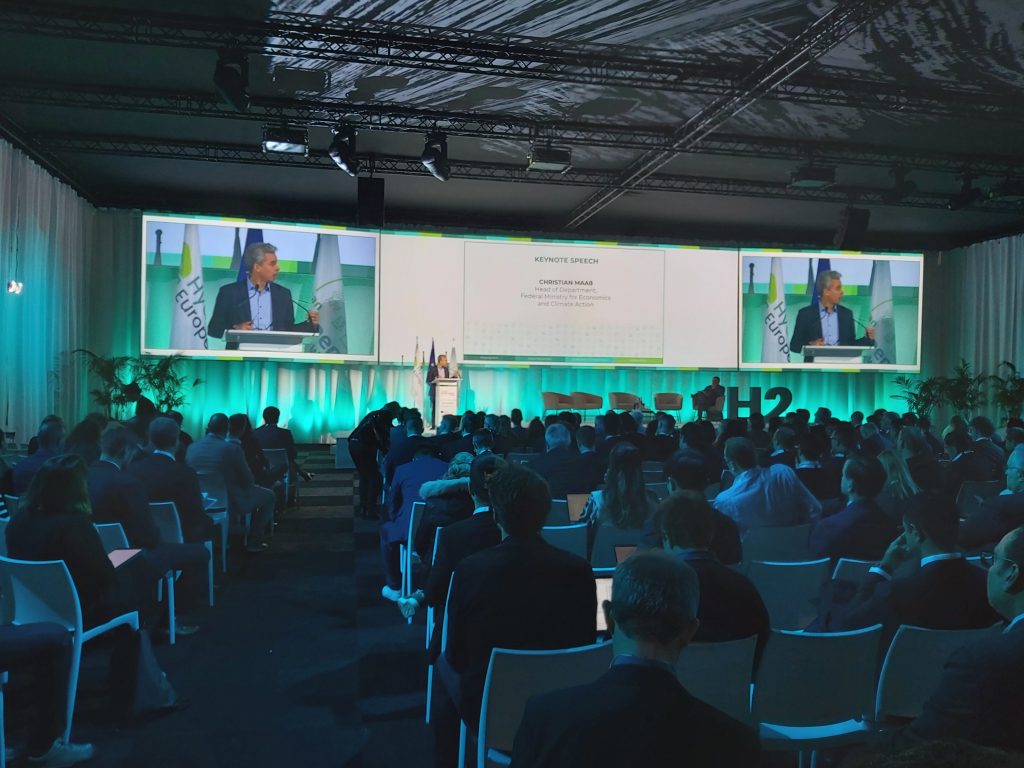
More than 200 exhibitors, including from representatives of international partners Brazil and South Africa, populated the exhibition floor with their innovative products, projects, and plans. More than 200 speakers were involved in bringing lively and fascinating discussions across 27 sessions between the High-Level Policy Conference and B2B forum. The week was bookended by two major announcements for the hydrogen sector: on Monday, European Commission President Ursula von der Leyen informed attendees that the second European Hydrogen Bank auction would take place in Spring 2024 with a budget of €2.2 billion. This figure is nearly triple the budget of the pilot auction and meets the €3 billion commitment first made by Predident von der Leyen in her 2022 State of the Union address. In addition to several important events, the Hungarian Hydrogen Technology Association held personal professional discussions with, among others, the leaders of BMW, Hydrogen Europe, the Polish, LET and Slovakian hydrogen associations. Speaking of the pilot auction, former Dutch foreign minister and current European Commissioner for Climate Action Wopke Hoekstra arrived at the event on Thursday to officially launch the €800m competition. Bidding is now open and a decision on winning projects is expected by April 2024. Meanwhile, President von der Leyen had one more announcement to make: of an agreement with the Brazilian State of Piauí to support the construction of a 10GW green hydrogen facility, part of a €2 billion Global Gateway investment in the hydrogen value chain in Brazil. “It has been another fantastic European Hydrogen Week and we would like to thank all of our exhibitors, sponsors, supporters, partners, speakers and visitors for making it so successful. We have been able to engage in important dialogue, share knowledge and visions of the future, and we have also heard huge announcements that will reverberate across the hydrogen sector,” said Jorgo Chatzimarkakis, CEO of Hydrogen Europe. For their valuable participation, we would also like to thank An Stroobandt – Deputy Head of Cabinet of Federal Minister of Energy, Belgium, Terje Aasland – Minister of Petroleum and Energy, Norway, Gillian Martin – MSP, Minister of Energy, Scotland, Tarik Hamane, CEO of the Moroccan Agency for Sustainable Development, Rafael Tajra Fonteles, Governor of the State of Piauí, Brazil, Zeid Al Ghareeb – Director-General of the National Program for the Circular Carbon Economy, Ministry of Energy of The Kingdom of Saudi Arabia, Bonginkosi Nzimande – Minister of Higher Education, Science and Innovation, South Africa. Please save the date for the next European Hydrogen Week, which will take place from the 18th to the 22nd of November in 2024! https://youtu.be/NNhDil6g-Yg
A successful European Hydrogen Week concludes Read More »
Karpacz in Silesia hosted the 32nd annual economic conference, also known as the Eastern European Davos. Two people from the association traveled in their own car to the settlement north of Pardubice in the Czech Republic, next to the Polish border in the southwest. István Lepsényi participated in the event as president of MÁV, and MÁV took care of his travel and participation. István Lepsényi took part in the rail transport panel and officially represented MÁV, at the same time he mentioned to the professional audience (about 50 people) MÁV’s renewable energy plans, including plans for the procurement of hydrogen locomotives. Dr. Attila Nyikos, executive director of the Hungarian Hydrogen Technology Association, participated in a panel discussion at the request of Poland. The topic and title of the panel: Natural Gas Hub or Hydrogen Hub? What role can Poland play on the gas market in Central and Eastern Europe? i.e. Natural gas or hydrogen center? What role can Poland play in the Central and Eastern European gas market? The evening started at 19:15 with a one-hour panel discussion. 70 interested people participated, including several Polish journalists. The leader of the discussion was Krzysztof Ksiezopolski (SGH Warsaw School of Economics) and the participants were Andrzej Wegrzyn, president of the Lower Silesian Hydrogen Valley Association, Alan Beroud SKM sp. zo.o. Kamil Kobylinski is the director of TotalEnergies in Poland, Daniel Minarik is the representative of the Moravian-Silesian Region, and Grzegorz Jozwiak Orlen s.a. director of hydrogen technology and synthetic fuel.
Economic Forum, Karpacz Poland, 09.05-07.2023 Read More »
On June 26, 2023, the Oława EKO Energy Cluster hosted the delegation of the Hungarian Hydrogen Technology Association. The meeting, commenced by a study visit to the EKO Cluster, focused in particular on agrohydrophotovoltaic technologies and solutions employed in the use of hydrogen, is attended by: Attila Nyikos – executive director of Hungarian Hydrogen Technology Association (HHTA) accompanied by representatives of the Hungarian Ministry of Agriculture: Anikó Juhász -The Deputy State Secretary for Agriculture, Levente Elemér Pintér and Zoltan Bige – Chef Strategy officer, Nitrogen Plants. During the very valuable talks, both sides had the opportunity to present their daily activities and discuss opportunities for cooperation; participants also had the opportunity to take part in bilateral meetings. We are delighted to co-hosting this meeting. „Many thanks to the Hungarian representatives for the exchange of information and the visit, which will certainly result in many joint initiatives in the near future.” – Oława emphasized in the official announcement of the EKO Energy Cluster.
The European Commission has approved a €1.1 billion (US$1.2 billion) scheme from the government of Hungary to support large-scale energy storage projects. The projects will help Hungary transition to a net-zero energy system, and the scheme was approved under the EU’s Temporary Crisis and Transition Framework, adopted in March to support sectors key to accelerating the transition and reducing fossil fuel dependency. Hungary is aiming to support the installation of at least 800MW/1,600MWh of new energy storage projects through the scheme. The projects will help to integrate new renewable energy resources in its electricity system. The funding is equivalent to HUF 436 billion. The money is available for companies active in Hungary’s energy sector, except financial institutions, and will also be available for projects outside its borders which can provide the power through cross-border transmission capacity. All energy storage technologies are eligible, although lithium-ion remains the technology of choice for the vast majority of large-scale projects today. The projects will be selected through a competitive bidding process and grants will be awarded before the end of 2025. They will take the form of an investment grant during the construction phase and a two-way contract for difference (“CfD”) mechanism to be paid annually during the 10 first years of the operations phase of the supported projects. CfDs usually involve a cap and floor mechanism, essentially guaranteeing a minimum and maximum revenue range. Projects will have to be built and operational within three years (36 months) of the signing of the contract. The investment grant will be partly funded by Hungary’s portion of the Recovery and Resilience Facility, and partly by a Modernisation Fund, while the 10-year annual support will be financed through a levy. Original news
EU approves €1.1 billion state aid for energy storage in Hungary Read More »

Toyota is speeding up the decarbonization efforts of the Fukushima plant by using hydrogen: an electrolyzing equipment using hydrogen fuel cell electric Toyota Mirai technology, which is already available in Hungary and emits clean water as a byproduct, is being put into operation. Toyota has been working with Fukushima Prefecture since June 2021 to develop new future cities that will use both hydrogen produced in Fukushima and hydrogen-related technologies developed there. As part of these efforts, Toyota is working with the DENSO Group to use hydrogen and renewable energy to decarbonize its plants. Toyota recently developed a new electrolyzer that uses hydrogen fuel cell cells and Mirai’s other technologies to produce hydrogen by electrolyzing water. The equipment will be commissioned in March this year at DENSO’s Fukushima plant, which will serve as a technology launch site to facilitate future widespread use. Toyota is accelerating its efforts to develop a local consumption model for locally produced hydrogen: pure hydrogen is produced using electrolysis equipment and then burned in one of the plant’s gas furnaces. In addition, Toyota is disclosing details of its efforts to develop such a hydrogen utilization model in hopes of expanding the implementation of the model to companies from different industries and regions. The hydrogen utilization of DENSO’s Fukushima plant is implemented as a project supported by Japan’s New Energy and Industrial Technology Development Organization. The potential inherent in hydrogen as a zero-emission energy carrier Toyota has identified hydrogen as a critical fuel in driving carbon emission reduction initiatives that advance the achievement of carbon neutrality. In doing so, it aims to promote the use of hydrogen not only through hydrogen fuel cell electric vehicles (FCEVs) – such as cars, commercial vehicles and buses, trains and ships – but also through the widespread use of fuel cell (FC) products, such as the development of stationary FC generators and test run. To this end, Toyota works with various industry partners in the production, transportation, storage and use of hydrogen. To this day, Toyota uses hydrogen for its FCEV models, FC stationary generators, plant manufacturing, etc. It has supported transport activities such as the development and production of FC trucks for the transport of hydrogen. In the future, Toyota hopes to develop electrolysis equipment and supply using biogas produced from animal manure in Thailand to expand its hydrogen production capabilities.